
ODIN Platform




Map → Evidence → Observability → Advisory → Recommendation
Designed to make the first Community workflow concrete without claiming risky automation or invasive scanning.
Map
Hosts, services, endpoints, DNS/routes, monitors, and relationships.
Evidence
TLS, backup, monitoring, ownership, update, and service facts.
Observe
Coverage, freshness, telemetry, readiness, and degraded states.
Advise
Patch/update pressure and risk surfaced without mutation.
Recommend
DORI explains the next safe improvement and why it matters.
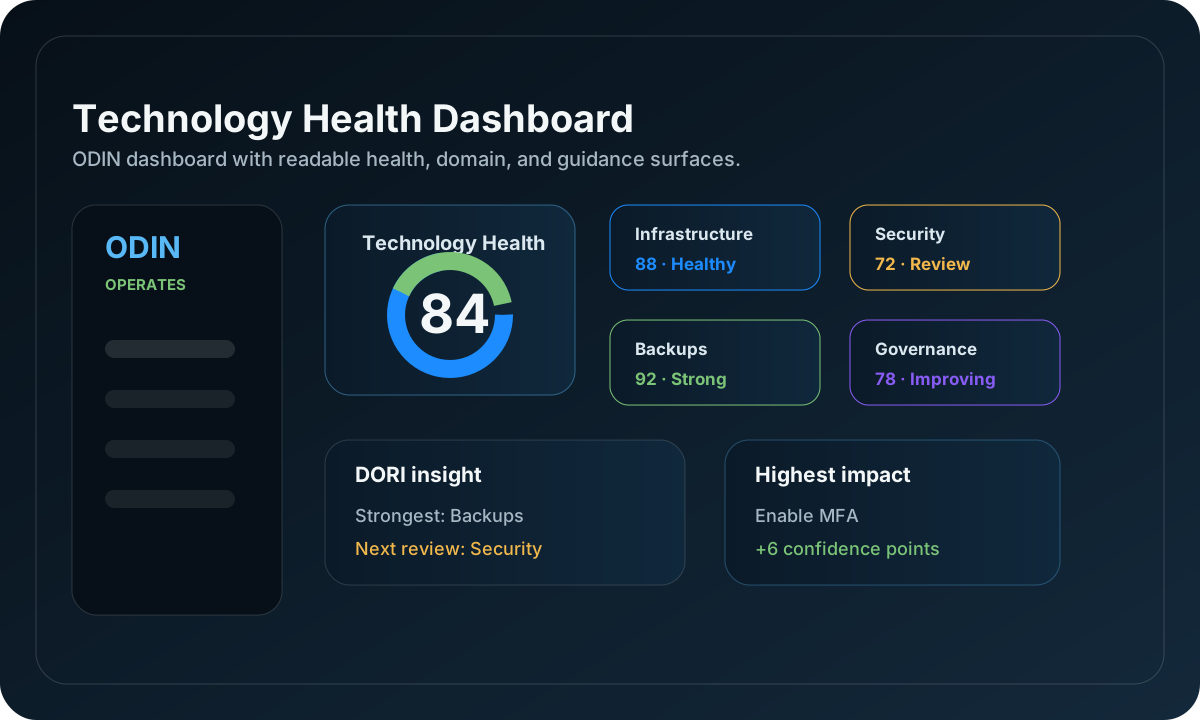
ODIN organizes the environment. DORI makes it understandable
What ODIN does
ODIN is the Technology Health platform and operational cockpit.
It is designed to organize assets, relationships, evidence, health signals, readiness indicators, recommendations, and improvement paths into a coherent operating view.
ODIN should help a user move from scattered tool outputs to a clearer picture:
- what exists;
- how services connect;
- who owns each service or asset;
- what is monitored;
- what evidence exists;
- what evidence is stale or missing;
- what looks healthy, degraded, risky, or unknown;
- what improvement should happen next.
Community proof-loop surfaces
The Community proof loop should make these surfaces visible:
| Surface | User value |
|---|---|
| Environment Map | shows hosts, services, endpoints, routes, monitors, backups, and relationships |
| Asset Registry | turns imports and manual entries into curated records with provenance and confidence |
| Observability | surfaces monitoring, alerting, telemetry freshness, and monitor coverage |
| Backup Readiness | shows whether backup and restore evidence exists and whether it is current |
| Certificate Posture | shows certificate status, renewal context, and delegated certificate visibility |
| Patch & Update Advisory | highlights stale or risky update candidates without executing changes |
| Coverage / Health | shows what is known, unknown, stale, or improving |
Trust boundary
ODIN should start by observing, mapping, importing, evidencing, and advising.
Risky changes require explicit approval, stronger governance, and later guardrails. Community-lite maps and advises. It does not run invasive scans or mutate infrastructure.
Reviewer questions
- Is ODIN distinct from a dashboard or CMDB?